Global Japanese Sushi Rolls
Highlighted under: East & West
I absolutely love making sushi at home, and creating these Global Japanese Sushi Rolls has become a delightful experience for me. The combination of fresh ingredients like avocado, cucumber, and various proteins wrapped in perfectly vinegared rice offers a burst of flavor in every bite. It's a fun and customizable dish, perfect for sharing with family and friends. Whether it's for a casual meal or a special occasion, these rolls are sure to impress and satisfy sushi lovers of all kinds.
When I first ventured into making sushi, I was amazed at how simple yet rewarding it could be. Using fresh, quality ingredients for the rolls truly elevates the taste. My favorite addition is a hint of wasabi paired with soy sauce; it enhances the overall flavor profile of the rolls. I've found that preparing the rice with the right vinegar balance is key—it gives the sushi that authentic taste.
One of my fondest memories is hosting a sushi night with friends, where each person created their own rolls. It was a blast! I encouraged everyone to experiment with different fillings, like spicy tuna or tempura shrimp. The fun part is combining various flavors and textures, which transforms each bite into a unique experience. This shared creativity is what makes sushi special for me.
Why You'll Love This Recipe
- Customizable fillings to suit your taste
- Fresh ingredients create a delicious flavor burst
- Perfect for gatherings and sushi nights with friends
Choosing the Right Ingredients
When it comes to preparing sushi rolls, the quality of your ingredients can significantly affect the final taste. Opt for sushi-grade fish that's fresh and vibrant; this ensures both flavor and safety in your rolls. For a vegetarian option, consider replacing fish with marinated tofu or tempura vegetables, which can add texture and depth to your sushi. Also, look for ripe avocados that yield slightly when pressed; these bring a creamy element that balances the other ingredients beautifully.
Cucumber adds a refreshing crunch, which complements the creaminess of avocado. When julienning, make sure your cuts are thin and uniform for even distribution throughout the roll. If you want to experiment, try incorporating different vegetables like bell peppers or pickled radishes. These variations not only enhance the visual appeal but also provide different flavor profiles, making each roll a unique gastronomic experience.
Mastering the Sushi Rolling Technique
The key to rolling sushi successfully lies in the technique. When spreading the sushi rice over the nori, ensure the rice is sticky but not too wet; using slightly damp hands helps prevent sticking without soaking the nori, which can lead to tearing. Aim for a layer that's about 1/4 inch thick to maximize the filling while ensuring the roll holds together well. If you find your nori tearing, it may be too dry—try lightly steaming it for a few seconds to make it more pliable.
As you roll, apply even pressure with the bamboo mat to create a tight yet gentle formation. Avoid overstuffing your roll, as this can lead to awkward shapes and uneven slicing later. A well-rolled sushi is snug and holds its shape, making slicing easier. If it’s your first time, don’t hesitate to practice a couple of rolls with less filling; it’s a great way to build confidence and skill.
Serving and Storing Sushi Rolls
Once your sushi rolls are sliced, presentation is key. Arrange them on a platter with a drizzle of soy sauce and a dab of wasabi for an authentic sushi experience. Consider adding pickled ginger on the side; it cleanses the palate between bites. If you're planning a sushi night, these rolls can be made ahead of time and refrigerated for up to 24 hours. To maintain freshness, wrap the rolls tightly in plastic wrap to prevent them from drying out.
For storage, avoid freezing completed rolls, as this compromises both texture and flavor. However, you can prep individual components, like the rice and fillings, in advance. Store sushi rice in an airtight container at room temperature, while vegetables and proteins can be kept in the fridge. This way, you can assemble the rolls fresh just before serving, ensuring that they're delicious and vibrant.
Ingredients
Gather the following ingredients to make your sushi rolls:
Sushi Ingredients
- 2 cups sushi rice
- 2 1/2 cups water
- 1/4 cup rice vinegar
- 2 tablespoons sugar
- 1 teaspoon salt
- Nori sheets
- 1 avocado, sliced
- 1 cucumber, julienned
- Fresh fish (like tuna or salmon), sliced
- Crab sticks
- Soy sauce, for serving
- Wasabi, optional
Make sure to have all your ingredients prepped and ready to go before starting the rolling process.

Instructions
Follow these steps to create your delicious sushi rolls:
Prepare the Sushi Rice
Rinse the sushi rice under cold water until the water runs clear. Combine the rice and water in a pot and bring to a boil. Cover, reduce heat, and simmer for 18 minutes. Remove from heat and let it stand for 10 minutes. Mix the rice vinegar, sugar, and salt in a small bowl and then fold into the rice.
Assemble the Sushi Rolls
Place a sheet of nori on a bamboo mat. Wet your hands and spread a thin layer of sushi rice over the nori, leaving a small border at the edge. Lay your chosen fillings (avocado, cucumber, fish, or crab) in a line across the center. Using the mat, carefully roll the nori away from you, applying gentle pressure to form a tight roll.
Slice and Serve
Using a sharp knife, slice the sushi rolls into bite-sized pieces. Serve with soy sauce and wasabi on the side. Enjoy!
Once you've sliced your rolls, feel free to get creative with your presentation!
Pro Tips
- Experiment with different fillings and sauces for unique flavor combinations. Don't hesitate to try tempura shrimp, mango, or even cream cheese for a twist.
Ingredient Substitutions
If you're unable to find sushi rice, short-grain rice can be a suitable substitute. Just be sure to prepare it similarly by rinsing and seasoning for that authentic flavor profile. For those with dietary restrictions, swapping out fish for marinated chicken or cooked shrimp can still fulfill the sushi roll craving without compromising taste. Vegan eaters can enjoy a variety of fillings using seasonal vegetables and avocado, providing both nutrition and flavor without animal products.
For a gluten-free alternative, ensure that the soy sauce is certified gluten-free, or try coconut aminos, which gives a similar umami flavor with a hint of sweetness. Additionally, sesame oil can be drizzled for extra depth while maintaining a gluten-free recipe.
Troubleshooting Common Issues
Many home cooks encounter issues like soggy rolls or loose fillings. If your rolls are too wet, ensure your rice isn't overcooked and consider drying your hands between shaping. Soggy nori can also result from excessive moisture in the fillings; pat ingredients dry before using. If your sushi rolls are falling apart when slicing, it might be due to insufficient pressure while rolling; practice makes perfect here, so don’t be discouraged.
Also, if you notice that your sushi rolls aren't holding their shape while slicing, try chilling them in the fridge for a few minutes after rolling. This helps the ingredients bind together better and makes slicing easier while ensuring a clean edge.
Creative Variations to Try
Once you feel confident with the basic sushi roll, it's time to get creative! Consider adding spicy mayo or sriracha to your fillings for an exciting kick. Alternatively, incorporate fruits like mango or pineapple for a sweet twist that complements the savory components. You can also explore different styles, such as making temaki (hand rolls) for a fun DIY experience at the table.
Another variation is to create inside-out rolls where the rice is on the outside. This not only looks stunning but also allows for more generous filling. Just remember to coat the outside with sesame seeds or furikake for added flavor and visual appeal. The possibilities are endless, making sushi rolling an ever-evolving culinary adventure!
Questions About Recipes
→ Can I use brown rice instead of sushi rice?
While you can use brown rice, it has a different texture and flavor. Sushi rice is specifically sticky and designed for rolling.
→ How do I keep my rolls from falling apart?
Ensure you don't overfill the rolls and apply enough pressure while rolling them with the bamboo mat.
→ Is making sushi at home safe?
Yes, as long as you use fresh, high-quality ingredients and follow proper food safety guidelines.
→ What can I use instead of nori?
If you're not a fan of nori, you can try using rice paper wrappers or simply make a sushi bowl without the rolling.
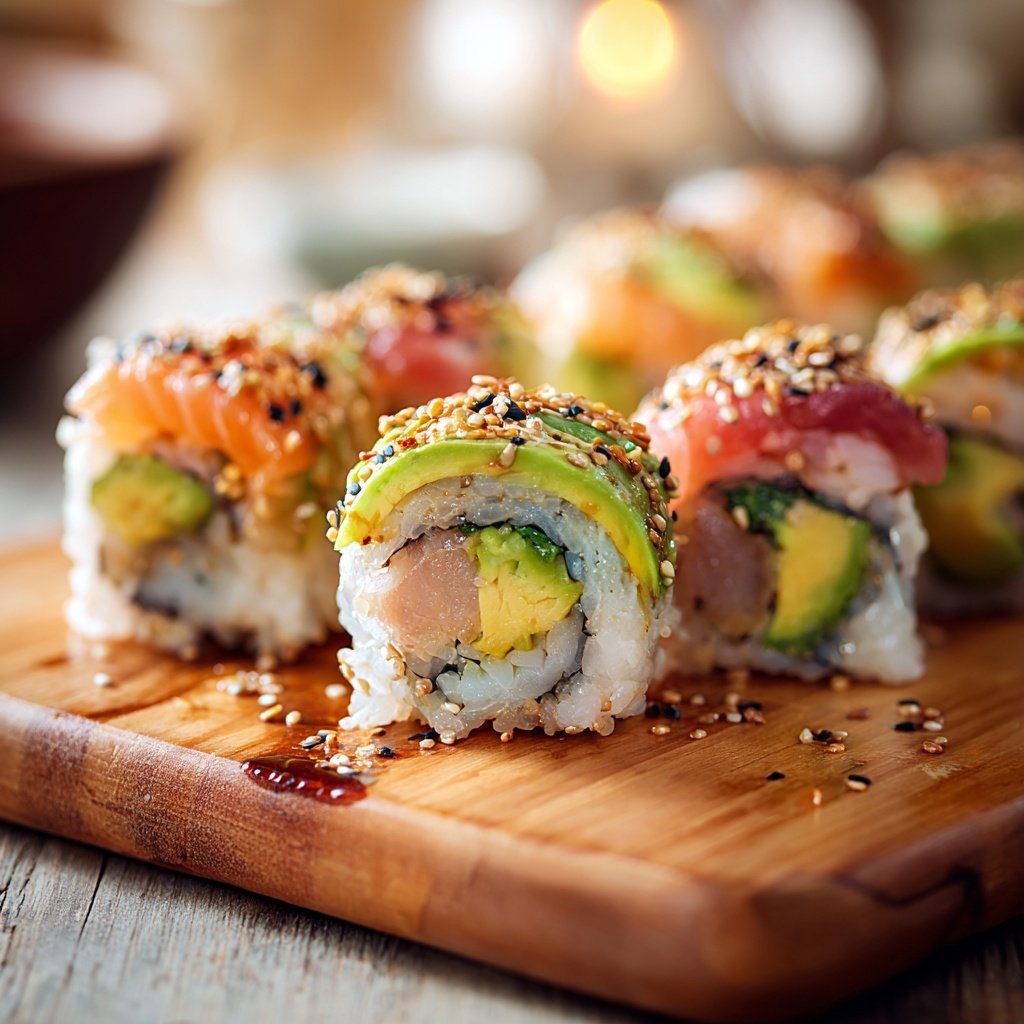
Global Japanese Sushi Rolls
Created by: The Chefvictorfoods Team
Recipe Type: East & West
Skill Level: Intermediate
Final Quantity: 4 rolls
What You'll Need
Sushi Ingredients
- 2 cups sushi rice
- 2 1/2 cups water
- 1/4 cup rice vinegar
- 2 tablespoons sugar
- 1 teaspoon salt
- Nori sheets
- 1 avocado, sliced
- 1 cucumber, julienned
- Fresh fish (like tuna or salmon), sliced
- Crab sticks
- Soy sauce, for serving
- Wasabi, optional
How-To Steps
Rinse the sushi rice under cold water until the water runs clear. Combine the rice and water in a pot and bring to a boil. Cover, reduce heat, and simmer for 18 minutes. Remove from heat and let it stand for 10 minutes. Mix the rice vinegar, sugar, and salt in a small bowl and then fold into the rice.
Place a sheet of nori on a bamboo mat. Wet your hands and spread a thin layer of sushi rice over the nori, leaving a small border at the edge. Lay your chosen fillings (avocado, cucumber, fish, or crab) in a line across the center. Using the mat, carefully roll the nori away from you, applying gentle pressure to form a tight roll.
Using a sharp knife, slice the sushi rolls into bite-sized pieces. Serve with soy sauce and wasabi on the side. Enjoy!
Extra Tips
- Experiment with different fillings and sauces for unique flavor combinations. Don't hesitate to try tempura shrimp, mango, or even cream cheese for a twist.
Nutritional Breakdown (Per Serving)
- Calories: 250 kcal
- Total Fat: 7g
- Saturated Fat: 1g
- Cholesterol: 40mg
- Sodium: 200mg
- Total Carbohydrates: 36g
- Dietary Fiber: 2g
- Sugars: 2g
- Protein: 8g